Testing of equipotential bonding on electromedical devices for robotic microsurgery

Operating rooms classified as Group 2 areas—that is, critical medical areas as defined by IEC 60364-7-710—are subject to extremely high safety standards. In these environments, electromedical equipment with parts applied to the heart or cardiac area is used, or surgical procedures are performed where a power outage puts the patient’s life at risk. For this reason, these rooms generally feature power supply via an isolation transformer and an equipotential bonding node.
The proper functioning of the protective circuit has fundamental safety implications. It ensures the flawless operation of all technical equipment and protects the lives of patients and operators: this requires that every device be grounded with minimal contact resistance.
The importance of this aspect can be summarized in four key points:
- Patient
Safety The patient is often connected to invasive devices and has reduced natural defenses. The system connects all nearby metal masses (operating table, equipment, structures) to the same electrical potential, preventing the flow of dangerous currents. - Service
Continuity Operating rooms use isolation systems (IT-M system) with dedicated transformers. In the event of an initial fault, the ground current is so low that it does not interrupt the power supply, allowing the procedure to be completed safely while an alarm signals the anomaly. - Protection against microcurrents
Prevents any electrical leakage (even minimal) from finding escape routes through the patient’s body, preventing tissue damage or potentially fatal cardiac fibrillation. - Electromagnetic
compatibility A good grounding system eliminates electromagnetic interference, ensuring that monitors, electrosurgical units, and surgical robots operate with maximum precision and without cross-interference.
The regulatory standards for biomedical devices are particularly complex and stringent, designed specifically to ensure that essential safety requirements are always met.
E.C.B.: Resistance measurement systems for microsurgical tools
In early 2026, we were commissioned to supply the testing system for measuring the final resistance of the equipotential bonding of NanoWrist™ tools for Symani™ microsurgery robots.
The Symani™ robot is a masterpiece of Italian engineering, which, with its NanoWrist™ tools, offers the world’s smallest microsurgery tools featuring 7 degrees of freedom, 20:1 scaling of the surgeon’s movements, and active vibration correction.
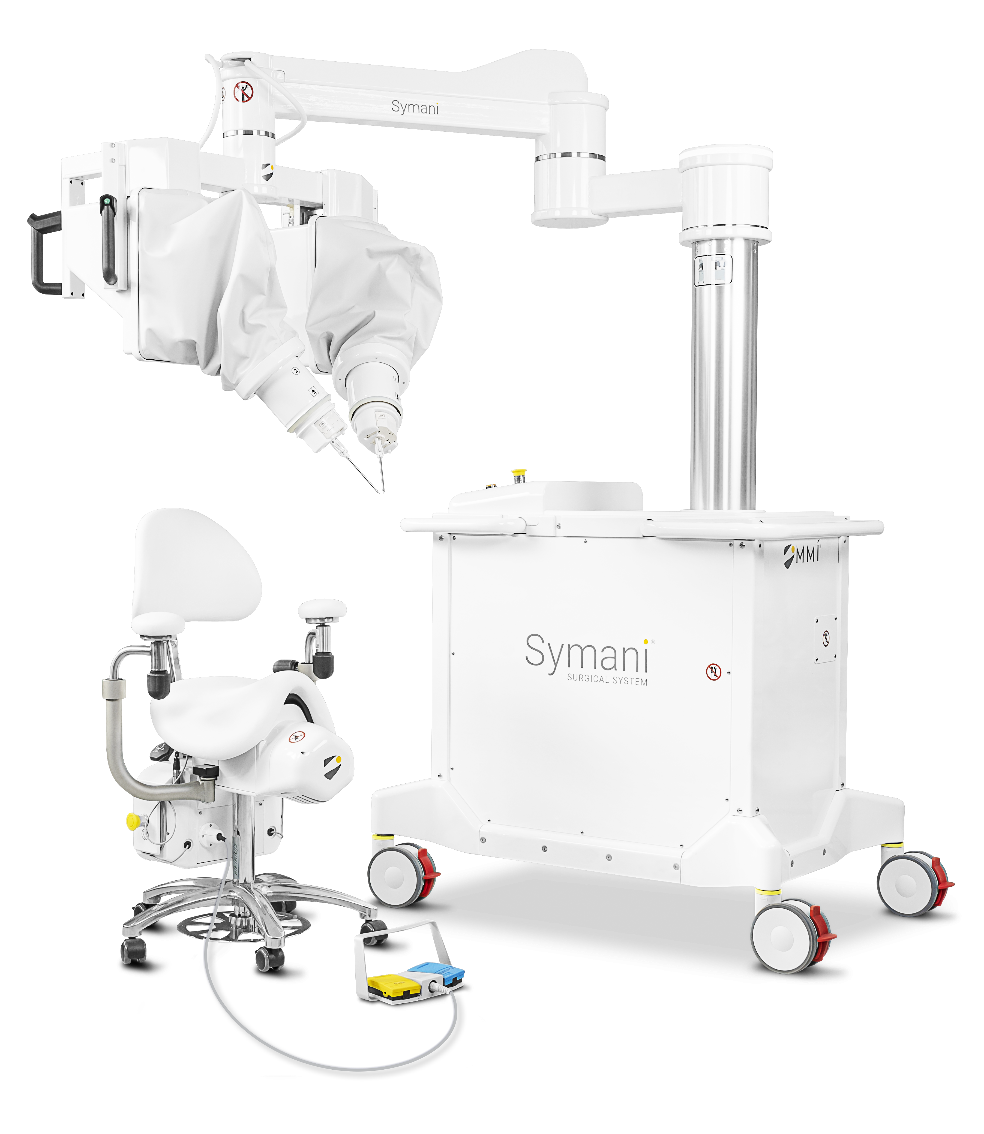
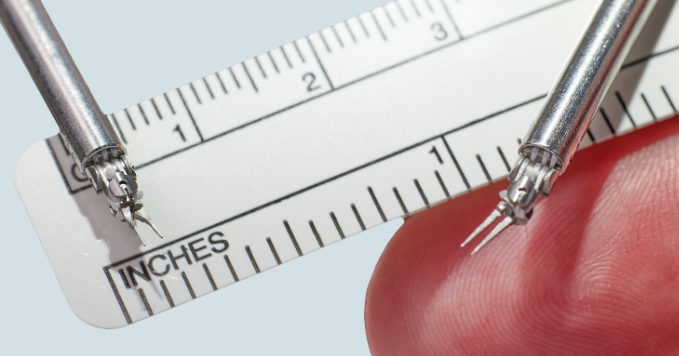
The Symani™ microsurgery robot and NanoWrist™ tools
The tools are equipped with an internal grounding connection that must be tested after sealing operations using special protective resins.
Since this is an application that does not require changes to the test conditions—which are predefined during the design phase—a fixed-current milliohmmeter with programmable alarms was chosen for testing.
Milliohmmeters with programmable alarms can manage multiple comparison thresholds for the measured resistance value. The 4-wire Kelvin connection minimizes measurement errors on resistances of particularly low value and, depending on the configuration—which is always defined based on the customer’s specifications— the measurement resolution can reach extremely high precision levels, even very low values such as 0.1 / 0.01 / 0.001 mOhm.
Their operation is extremely simple:
- Upon activation of the measurement signal, the instrument starts the internal generator, applying the desired excitation current.
- Simultaneously, via the sensing terminals, it acquires the voltage across the resistor under test.
- The internal circuitry then calculates the resistance value by dividing the measured voltage by the excitation current.
- The output stages are activated accordingly based on comparisons with the set alarm thresholds.
The measurement can be considered virtually instantaneous, but the measurement time is transparently adjustable and allows the resistance value to be evaluated over time intervals ranging from a few tenths of a second to several seconds.
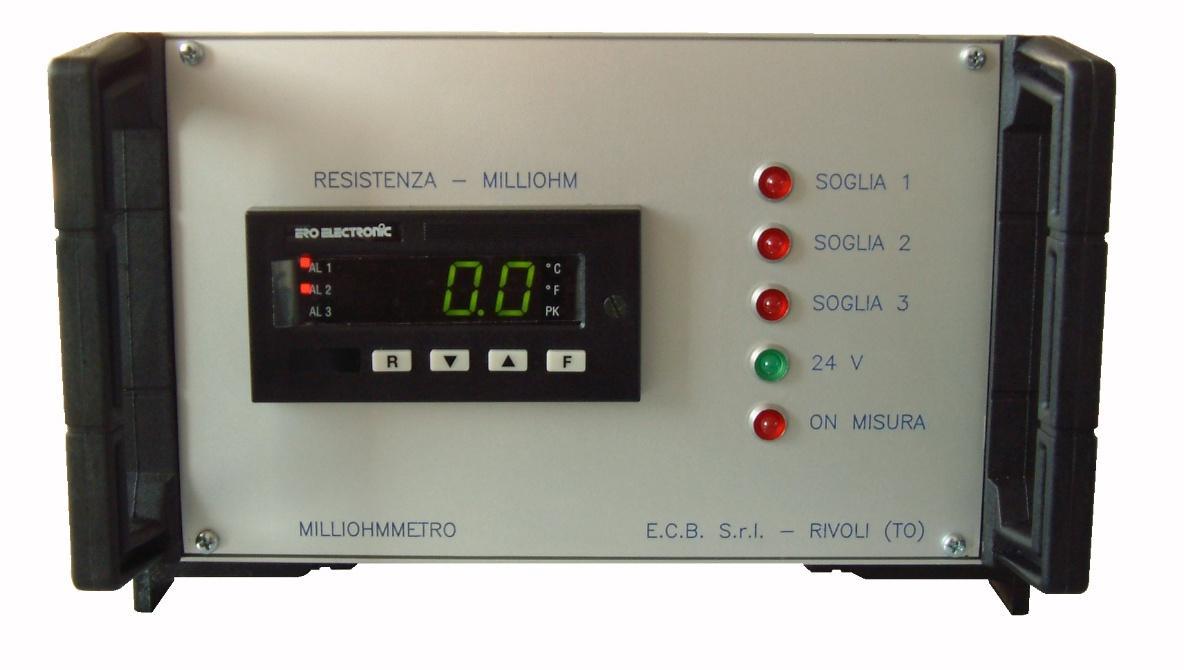
EOM Programmable Alarm Milliohmmeter
E.C.B. milliohmmeters: different models for optimal integration
E.C.B. develops various models of milliohmmeters to adapt to specific test architectures:
- Fixed-current with programmable alarms, for use on single-product production lines without the need to manage multiple setups.
- Programmable multi-range, for use on multi-product production lines, where it is necessary to dynamically vary test conditions (excitation current, measurement range, and resolution) and have more comprehensive management of test setups and process traceability.
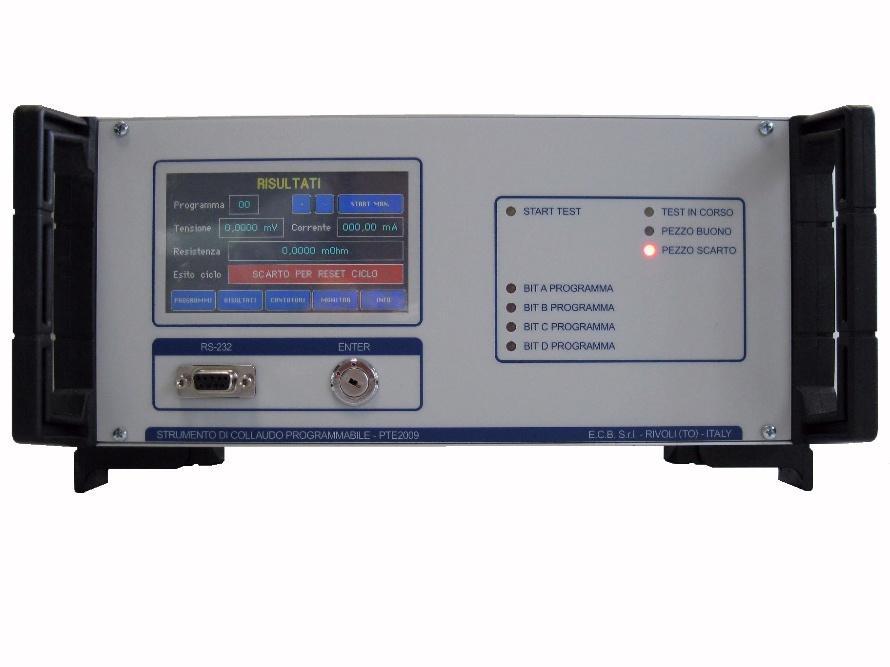
MOM2009 Programmable
Multirange Milliohmmeter
- For integration into stator test stations for brushless motors, for measuring the resistance of stator windings which, due to their extremely low resistance, require high excitation currents.
Are you looking for a reliable supplier to integrate a milliohmmeter for medical devices or automotive components into your production line or to build a complete automatic resistance measurement station?
Contact us to discover all our testing solutions.